



The founders
Twenty years ago, Benjamin Dageroth launched his first startup, qiss, to solve a very specific kind of panic: needing a gift and having no idea where to start. Today he’s back on the same problem, just with better tech and a much bigger closet.
Ben studied philosophy, political science and business informatics. Then he spent 12 years at Mapp / Webtrekk in Berlin as a product owner for AI and data science, plugging machine learning into marketing and analytics. Along the way he co-wrote a book on appreciation at work, Wertschätzung: Ein Praxisbuch. Not your typical fashion founder bio.
His co-founder, Stephan Pfob, is even less typical. He’s a philosopher by training, CEO of the Berlin consultancy Berlin Alley, author of Starke Gespräche (2025), a book about having better conversations, and host of a podcast on the psychology of happiness at work. Two philosophers walk into fashion tech. That’s the actual setup.

What’s happening
Fashion ecommerce is still built for people who already know what they want. Type “blazer,” get a wall of blazers, scroll until your thumb gives up. hypsh says it read what people actually typed into search boxes and found one word, over and over: “jeans,” “blazer,” “trousers.” People who showed up wanting an outfit and left with a list.
Ben puts it simply: “People do not want to search for clothes, they want to dress for an occasion.”
So hypsh flips the model. You describe the moment, like a summer wedding, a first day at a new job, or “elegant, but not stiff,” and the AI builds a complete look from real, shoppable products. You can swap pieces, lock the ones you love, or drop in a photo of something you already own and let it style around it.
The hypsh AI stylist in action. Video: hypsh
How it works
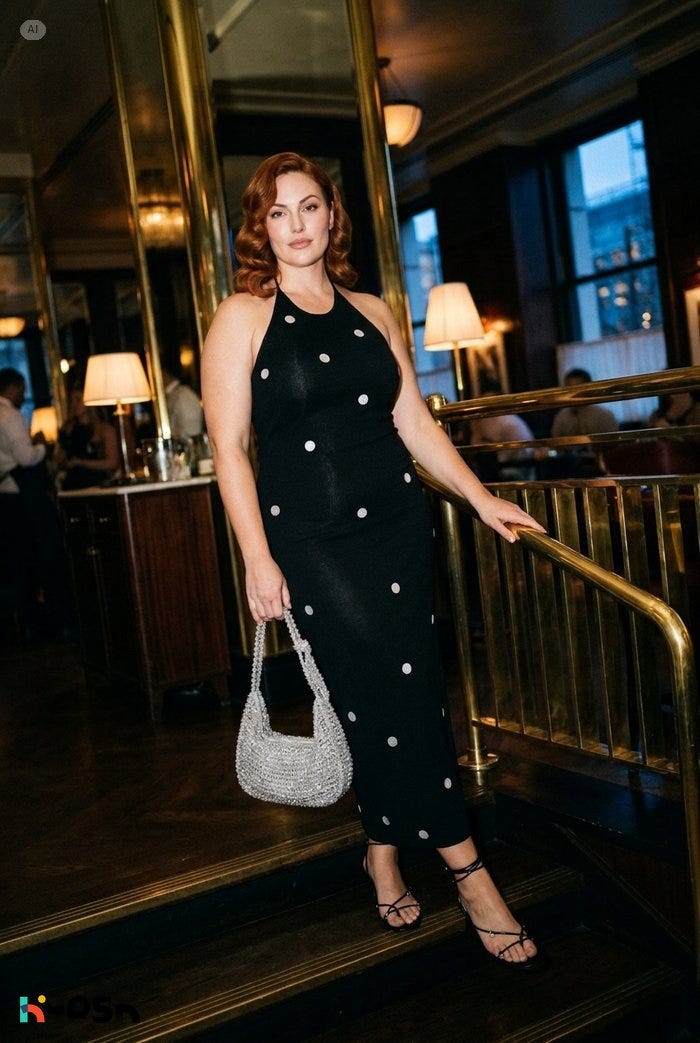
The consumer version, hypsh.com, opened to the public on August 26, 2026. There’s a Style Pass that reads one photo to estimate your body shape, colouring and sizes, then powers virtual try-on for the full outfit, not just a single garment. Every generated model carries a visible AI label.
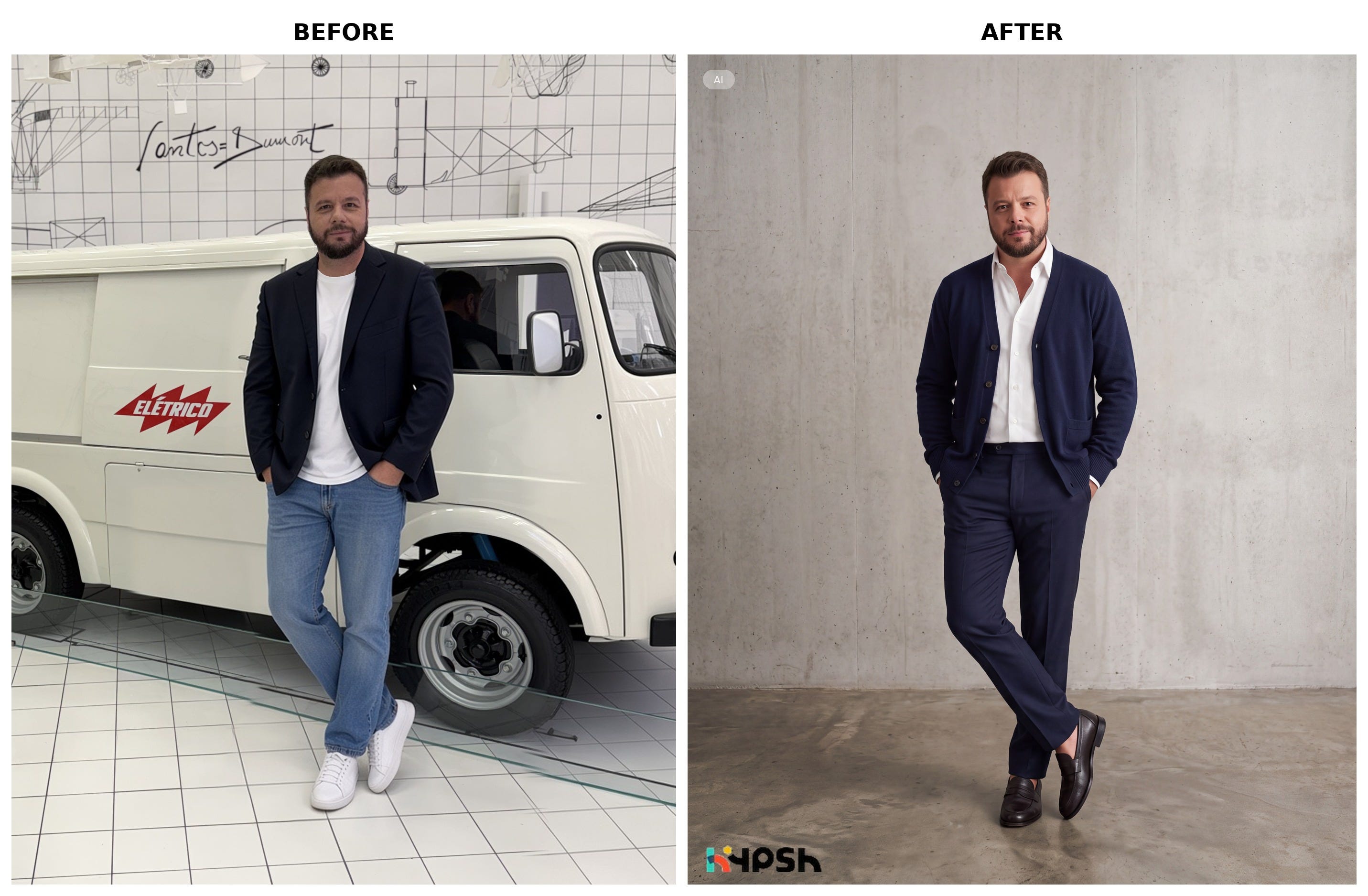
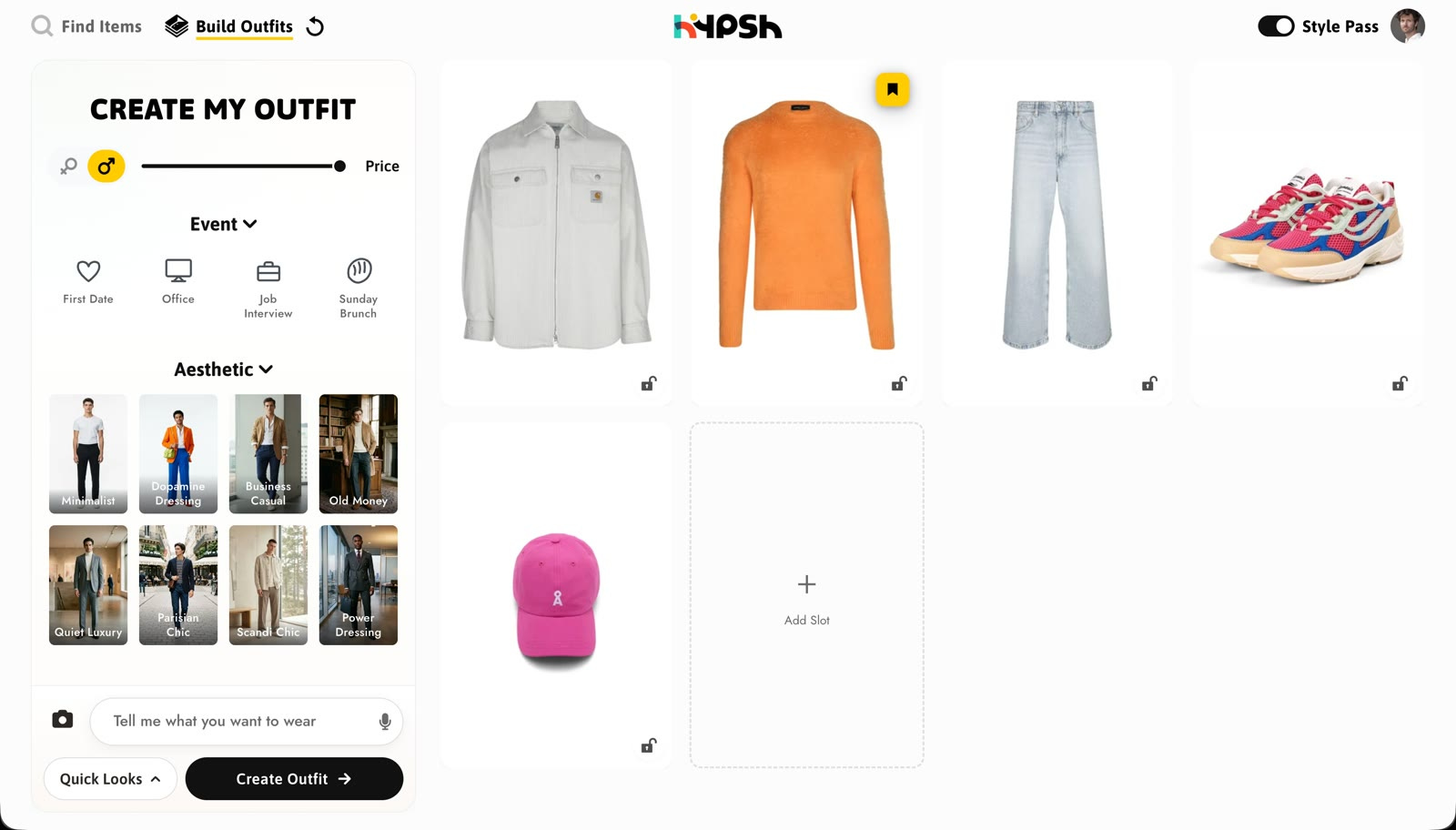
For retailers, hypsh.ai sells the same engine: semantic search in 40+ languages, catalog enrichment with 50+ fashion attributes, in-store styling through QR codes, and a white-label ChatGPT app. Its pitch to stores is bigger baskets and fewer returns. The company is young: launched in 2026, a two-person team according to its LinkedIn page, and raising a pre-seed round while it looks for pilot retailers.
“Fashion retail has taught customers to search catalogues using keywords for decades. It’s time for technology to understand what people actually want, rather than expecting them to guess the right search terms.”
Benjamin Dageroth, founder of hypsh
My take
As someone who runs an AI photo company, here’s my opinion: the image isn’t the hard part anymore. The hard part is understanding what the customer actually means. hypsh is betting on that gap, and I think it’s the right bet. Building a search bar is easy. Knowing what goes with the boots is the real job.
The challenge, in my view, is proving it in a real retailer’s numbers, not only in a demo. If the pilots show fewer returns, this gets interesting fast.
