


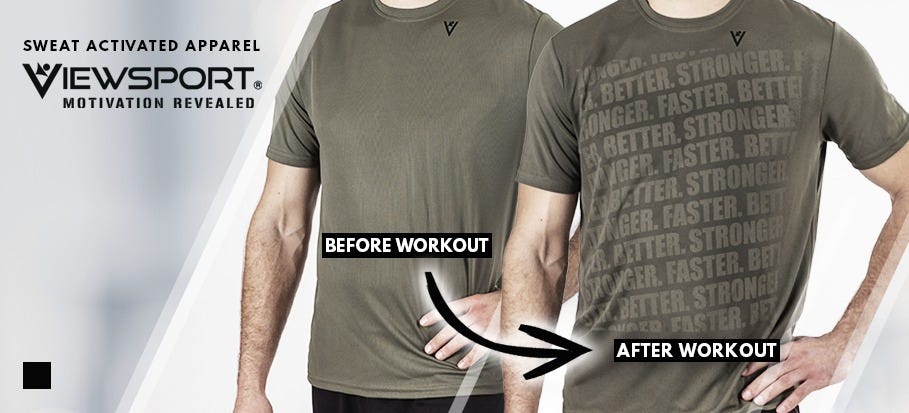
Before and after a workout: a ViewSPORT tee reveals its message. Image: ViewSPORT.
What if a piece of clothing could reveal a second identity while you wear it?
For decades, sportswear fought sweat with breathable, quick-drying fabrics. Now some brands do the opposite and make moisture part of the look.
Meet sweat-activated clothes: pieces that reveal hidden designs and messages when the fabric gets damp. A plain tee can grow an animal print mid-workout.
See the transformation happen
This reel shows a gray T-shirt revealing a leopard print.
Credit: brandologyy (Instagram).
It started in 2010
ViewSPORT, an American company founded in 2010 by inventor Ben Wood, is one of the best-known cases. The idea came from the marks sweat leaves on fabric, turned into motivational images.
In 2019, ViewSPORT partnered with IRONMAN, bringing the tech to endurance gear. So this is an existing product, not a brand-new invention. Read more at Endurance.biz
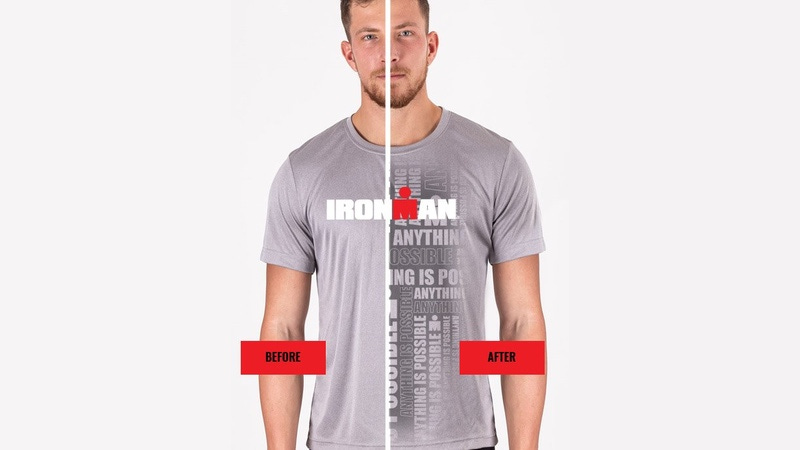
2019: ViewSPORT x IRONMAN tee, before and after sweat. Image: ViewSPORT/IRONMAN via Endurance.biz.
How can a print appear and disappear?
The trick is often hydrochromism. Certain inks turn from opaque to transparent on contact with water, revealing a hidden design, and can reverse as the fabric dries. No sensors or AI needed.
In 2014, Hanyang University researchers published a study in Nature Communications on a polymer that turns from blue to red in under 20 milliseconds on contact with water. Sweat from a single skin pore was enough. It was tested on film and a fingertip, not clothing. (Nature Communications)
A growing sector, but a niche without numbers of its own
Euromonitor expects the global sportswear market to pass US$ 500 billion by 2030, growing almost 5% a year. That covers the whole segment, and no data specific to sweat-activated prints turned up.
The catch is durability
No public data covers breathability, wash durability or comfort for these garments. A print can wow in a demo, but real life depends on comfort, washes and cost.
When the experience becomes a brand argument
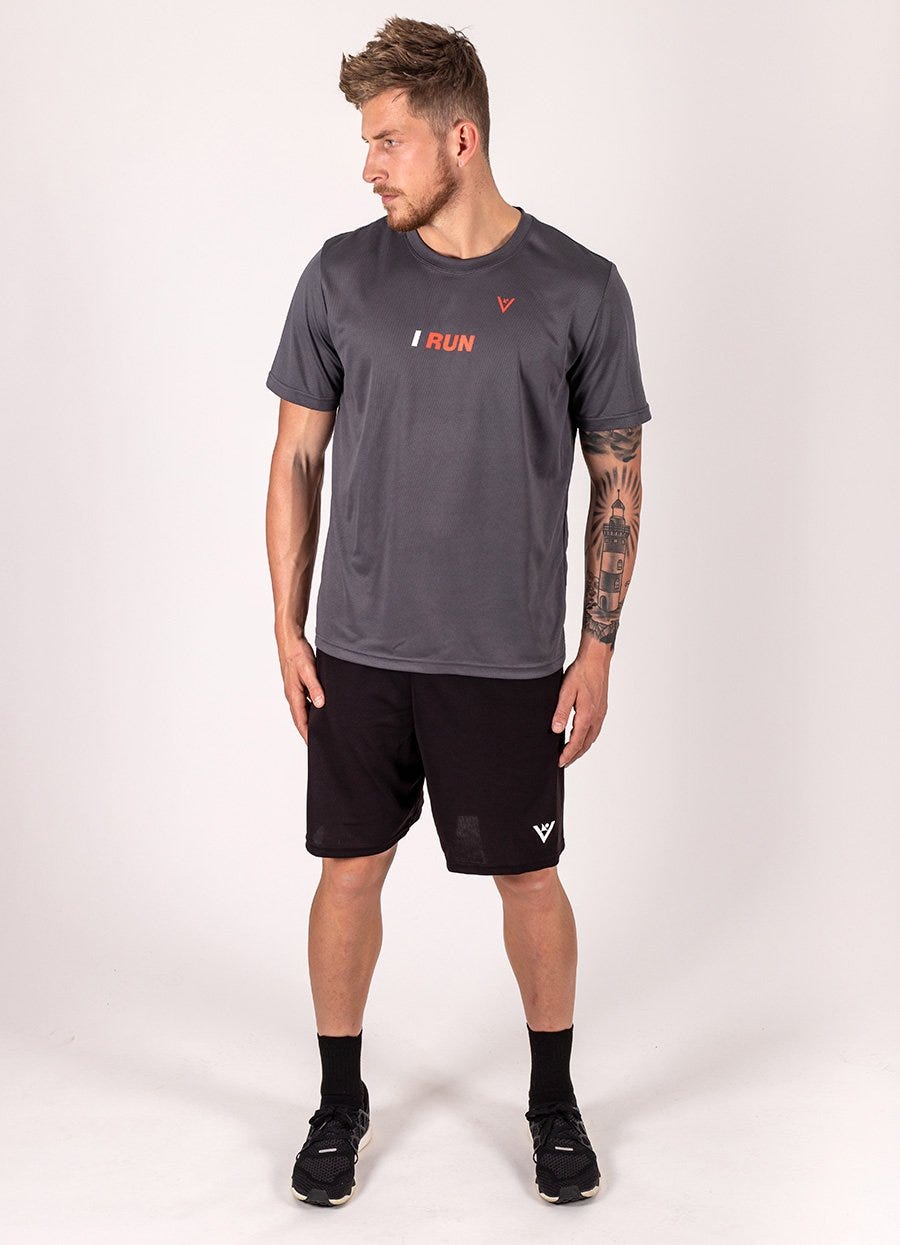
Image: ViewSPORT.
For brands, the before-and-after moment is great storytelling and sparks curiosity. It is a creative opportunity, not proof of higher sales.
The next chapter is on the surface
Tufts University researchers made silk-based inks that can be printed on fabric and change color with the pH and lactate in sweat. It is a different effect, but it shows where reactive clothes could go. (Advanced Materials)
The future of fashion is not only in how clothes look, but also in what they are capable of doing.
